
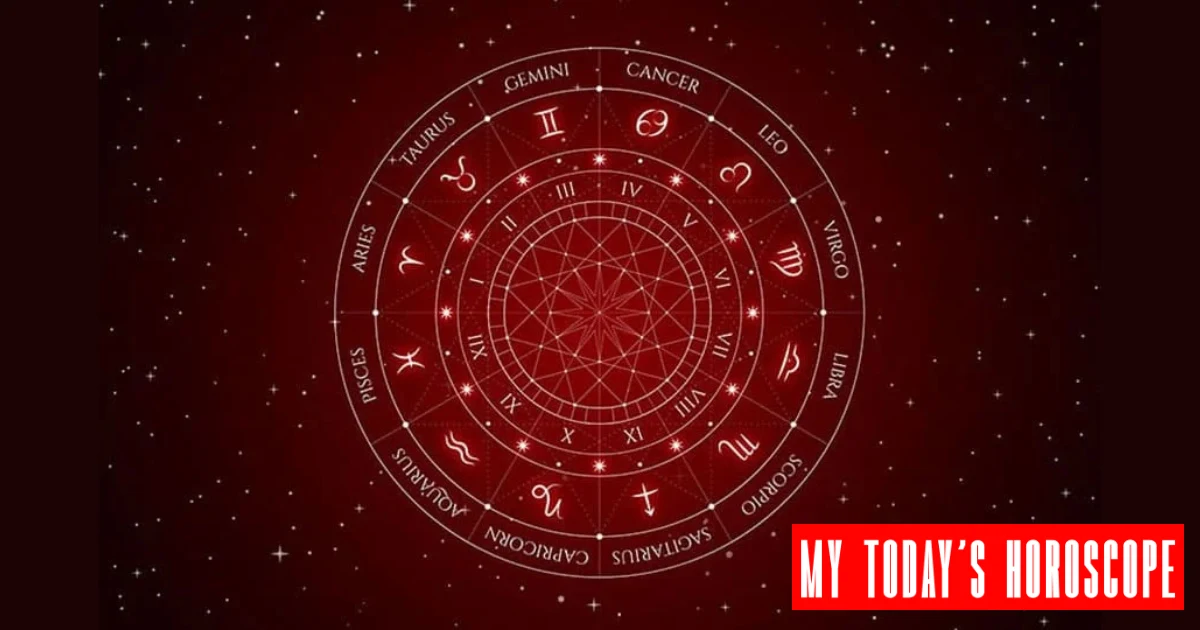
Quick Answer: People believe in astrology for reasons that are more psychologically sophisticated, historically grounded, and personally meaningful than its critics typically acknowledge. Astrology is not primarily a system of prediction — it is a symbolic language for self-understanding, a framework for navigating uncertainty, and one of the oldest forms of applied human wisdom in recorded history. Whether you are a lifelong believer or a curious sceptic, the more honest question is not whether astrology is scientifically proven, but whether it is genuinely useful — and for millions of people across thousands of years, the evidence for that is considerable.
The Question That Deserves a Real Answer
If you have ever found yourself secretly checking your horoscope, hesitating before admitting to a colleague that you take your birth chart seriously, or simply wondering why a practice dismissed by mainstream science continues to feel so persistently relevant — you are in very good company.
Over 30 percent of people worldwide regularly consult their horoscopes. In the United States, nearly 30 percent of adults believe astrology has scientific validity. Astrology apps generate millions of downloads. Entire publishing categories are organised around it. And the practice is experiencing one of its most significant cultural revivals in living memory, driven largely by millennials and Gen Z — the most scientifically educated generations in history — who were supposed to have abandoned magical thinking entirely.
Something does not add up in the conventional dismissal of astrology. And as an astrologer who has spent years studying both the tradition and the very real, very human needs it addresses, I want to offer an honest, nuanced answer to the question that millions of people are quietly asking: why do people believe in astrology, and is that belief reasonable?
The answer requires us to think more carefully than the culture war between “believers” and “sceptics” typically allows.
1. Astrology Is One of Humanity’s Oldest Systems of Self-Knowledge
Before we can evaluate whether astrology deserves belief, we must first understand what it actually is — and here, most of its critics miss the point entirely.
Astrology does not date back merely a few centuries to a pre-scientific misunderstanding of the universe. It dates back over 5,000 years, emerging independently in Mesopotamia, ancient India, China, Egypt, and Greece — civilisations with no contact with each other, all arriving at the same fundamental insight: that the patterns of the cosmos and the patterns of human experience are meaningfully related.
The foundations of the theoretical structure used in astrology originate with the Babylonians, and widespread usage did not occur until the start of the Hellenistic period after Alexander the Great swept through Greece. The Greeks subsequently developed the zodiac system and integrated it with their emerging philosophical frameworks. In India, Jyotisha — Vedic astrology — became one of the six auxiliary disciplines of the Vedas, the sacred knowledge system that underlies the entire Hindu philosophical tradition.
These were not primitive people who would believe anything. They were the builders of the civilisations we still study, the founders of mathematics, philosophy, medicine, and law. When they devoted centuries of careful celestial observation to the development of astrological systems, they were doing something we recognise in retrospect as consistent with their best intellectual habits: seeking patterns in the world and building interpretive frameworks from those patterns.
The history of astrology is not the history of a mistake that modern science has corrected. It is the history of humanity’s most sustained attempt to understand the relationship between the individual life and the cosmos that contains it — a question that science has not, in fact, answered, and may never answer.
2. Astrology Works as a Symbolic Language for Self-Understanding
Here is the insight that most commentary on astrology — both credulous and sceptical — consistently fails to grasp: astrology’s primary value is not predictive. It is interpretive.
The most sophisticated practitioners of astrology have always known this. A birth chart is not a fortune-telling machine. It is a symbolic map — a complex, richly layered language for describing the particular combination of energies, tendencies, strengths, and challenges that characterise a specific human soul at a specific moment of arrival in the world.
Research in Frontiers in Psychology highlights how individuals use astrological interpretations as a tool for self-exploration and meaning-making. The study suggests that astrology provides a symbolic language through which people can understand their life experiences, potential trajectories, and inner motivations. Each zodiac sign carries unique archetypal energies that can offer clues about an individual’s potential life purpose.
This is the key word: archetypal. The signs, planets, and houses of astrology are not empirical claims about how gravity or radiation affects the human brain. They are archetypes — primordial patterns of human experience that the Swiss psychiatrist Carl Jung spent a lifetime documenting in the collective unconscious of humanity. When astrology describes a Scorpio’s depth and capacity for transformation, or a Capricorn’s patient, structured relationship with achievement, it is describing something real — not because a planet made them that way, but because these patterns of human experience are genuinely real, and the astrological language is one of the richest symbol systems humanity has ever developed for mapping them.
The enduring popularity of astrology suggests that its value may lie not in forecasting external events, but in facilitating inner exploration, narrative identity, and emotional meaning-making. From the standpoint of psychology — particularly depth, cognitive, and cultural psychology — these practices reveal important dimensions of human cognition and behavior.
Jung himself worked extensively with astrological symbolism and wrote that astrology “represents the summation of all the psychological knowledge of antiquity.” The man who founded analytical psychology and mapped the architecture of the unconscious did not dismiss the system that had spent four thousand years doing the same work through different means.
3. Astrology Addresses Needs That Science Does Not Meet
The most important and least acknowledged reason why people believe in astrology is this: science, for all its extraordinary achievements, does not answer the questions that astrology addresses.
Science tells us how things happen. It does not tell us why they happen to us, specifically, in the particular sequence and combination that constitutes our individual life. It does not tell us what our gifts are, what our challenges mean, what kind of person we are becoming, what role we are here to play. These are the questions that drive human beings to every form of wisdom tradition — from religion to philosophy to therapy to astrology — and they are not questions that the scientific method was designed to answer.
People want answers to questions, especially the hard-to-answer questions such as “Who controls my life?” and “Do I have a destiny?” Some people find existential answers in astrology. Seeking answers and astrological advice for comfort may not require any proof of accuracy.
This is not a failure of intelligence. It is an accurate recognition of what science does and does not offer. The person consulting a birth chart for insight into their relationship patterns, their career direction, or their emotional needs is not making the category error of treating astrology as physics. They are making a sophisticated and entirely reasonable decision to use one of humanity’s most developed symbolic systems for exactly the purpose it was developed: self-knowledge in the face of existential uncertainty.
Life can feel chaotic and unpredictable. Astrology offers structure — an explanation for why things happen. When Mercury is in retrograde, instead of blaming yourself for communication breakdowns, you can externalize the cause. The psychological function of this externalisation is more sophisticated than it appears. It is not magical thinking — it is a cognitive strategy for de-centring the self from its own suffering, for placing personal difficulty within a larger pattern that includes, and therefore partially normalises, the difficulty. This is precisely what psychotherapy does, through a different symbolic vocabulary.
4. The Psychology of Belief: What the Research Actually Shows
Let us be honest about what the scientific research on astrology actually finds — because the picture is considerably more nuanced than the casual dismissal suggests.
It is true that controlled studies have consistently failed to demonstrate that astrologers can predict individual outcomes at better than chance levels. The famous Shawn Carlson double-blind study of 1985 remains the most rigorous test of astrological prediction, and astrologers did not outperform chance.
It has also been shown that confirmation bias is a psychological factor that contributes to belief in astrology. Astrology believers tend to selectively remember predictions that turn out to be true, and do not remember those that turn out false.
These are important findings, and anyone who engages seriously with astrology should know them. Intellectual honesty requires acknowledging that astrology’s predictive claims have not been scientifically validated, and that several well-documented cognitive biases — including the Barnum effect, confirmation bias, and self-attribution — contribute to the subjective experience of astrological accuracy.
But here is what the research also shows: science itself has acknowledged that placebo effects and belief systems can influence human behavior and health outcomes. If believing in astrology reduces stress, gives hope, or motivates positive action, then its impact is real — even if not cosmically determined.
The experience of reading your birth chart and finding it resonant is real. The self-reflection it prompts is real. The framework for understanding your patterns that it provides is real. The community and shared language it creates are real. Astrology allows individuals to explore their personalities — it acts as a mirror, encouraging self-discovery and even growth. Whether or not a planet caused a personality trait, the act of examining yourself through a complex, detailed, symbolically rich framework produces genuine self-knowledge.
Psychology does the same thing. The Myers-Briggs Type Indicator has been widely criticised for lacking scientific rigour, yet therapists and coaches use it because it works as a framework for self-reflection and communication. Narrative therapy uses stories and metaphors as the vehicle for psychological change. Cognitive behavioural therapy uses the framework of “cognitive distortions” — a metaphor, not a neurological fact — as a map for changing thought patterns.
Astrology is doing what all of these practices do: providing a symbolic framework that, when engaged with seriously and thoughtfully, facilitates genuine self-understanding. The framework may be more ancient and more poetic than a CBT thought record, but its function is not categorically different.
5. The Cosmic Connection: Why the Symbolism Resonates
There is one final dimension of astrology’s appeal that purely psychological accounts miss — and as an astrologer, I consider it the most important.
Human beings are not merely psychological entities. We are physical organisms embedded in a physical universe, and the universe is not indifferent to us in the way that materialist philosophy sometimes suggests. The Moon governs the tides. The Sun governs the seasons. The entire biological machinery of life on Earth was built in relationship with celestial rhythms that predate our species by billions of years. Our bodies are attuned to light cycles, lunar cycles, and seasonal cycles at the cellular level. This is not mysticism — it is chronobiology, a well-established scientific field.
Earth lies under constellations known as our star signs millennia ago; though signs no longer correlate directly to these constellations, seasons and planetary movements still influence us just like they used to.
The idea that the cosmos and the human being exist in relationship — that we are participants in a larger pattern rather than accidents in an indifferent universe — is not a primitive fantasy. It is a philosophical position of considerable sophistication, shared by thinkers from the Stoics to Spinoza to Carl Sagan, who famously observed that we are made of “star stuff.” Astrology is the most developed human attempt to work out the specific shape of that relationship — what aspects of cosmic pattern correspond to what aspects of human experience, and how that knowledge can be used to live more consciously.
They offer symbolic maps of a chaotic reality and suggest interpretive anchors to navigate ambiguity. For many, this is less about believing in fate than about creating a coherent story during periods of uncertainty.
And creating a coherent story — finding narrative order in the apparent chaos of human experience — is not a cognitive weakness. It is one of the defining achievements of human consciousness. It is what history, art, psychology, and religion all do. Astrology simply does it with the stars.
6. Practical Benefits: What Astrology Actually Offers
For those approaching astrology with genuine seriousness — not as entertainment, not as prediction, but as a system of self-knowledge — the practical benefits are tangible and well-documented by practitioners and their clients across every era of human history:
Self-awareness that compounds over time. Understanding your natal chart is not a one-time reading but a deepening relationship with a complex symbolic portrait of yourself. The more you work with it, the more layers you discover. Many people report that their birth chart becomes one of the most useful frameworks they have for understanding why they respond to situations the way they do — more specific and more personal than any psychological profile, precisely because it was calculated for the exact moment and place of their birth.
A framework for navigating transitions. The planetary transits that astrology tracks — Jupiter’s twelve-year cycles, Saturn’s twenty-nine-year return, the eclipse cycles that recur every eighteen months — provide a temporal map for understanding where you are in the larger patterns of your life. Many people find that significant life transitions align meaningfully with major transits, and that understanding those patterns in advance allows them to approach changes with greater awareness and intention.
A language for relationships. Synastry — the comparison of two birth charts — provides one of the richest frameworks available for understanding the dynamics of a relationship. It does not predict whether a relationship will succeed, but it does illuminate with remarkable specificity where two people naturally harmonise and where they will predictably create friction, giving both parties a vocabulary for navigating those dynamics consciously.
Community and shared meaning. The casual use of sentences like “Dude, that’s the most Leo thing you’ve ever done” does not necessarily represent a belief in astrology. Instead, the zodiac category of Leo can append a context to the behavior, conveying a notion of typical behaviors. If two or more people know about ‘Leo characteristics,’ the sentence conveys additional meaning without requiring lengthy explanation. Astrology provides a shared symbolic vocabulary for human experience that creates genuine community — one of the most reliably documented needs of the human being.
The Honest Conclusion: What Belief in Astrology Actually Requires
Believing in astrology does not require suspending your critical faculties. It does not require believing that a distant gas giant is telepathically whispering decisions into your unconscious mind, or that the position of Venus at the moment of your birth permanently determines your love life regardless of your own choices and development.
What it requires is something considerably more defensible: the recognition that human beings are meaning-making creatures embedded in a cosmos whose rhythms we are only beginning to understand scientifically; that the symbolic languages humanity has developed for mapping inner experience are valuable even when they cannot be validated by controlled experiment; and that a system of self-knowledge that has served human beings across five thousand years and every major civilisation on Earth is at least worth engaging with thoughtfully before dismissing.
The astrologer’s honest answer to the question of why people believe in astrology is this: because it works — not in the way that antibiotics work, but in the way that great literature works, the way that therapy works, the way that any deeply developed symbolic language for understanding human experience works. It illuminates. It connects. It provides the experience — rare and precious and not reliably available elsewhere — of being genuinely, specifically, and surprisingly seen.
That is not nothing. That is, in fact, quite a lot.
The stars don’t speak. But they have never stopped asking us to look up — and in looking up, to better understand the lives unfolding beneath them.
Astrology is a tool for self-understanding and reflection. This article represents the perspective of the author and does not constitute professional psychological, medical, or therapeutic advice. If you are experiencing significant distress, please consult a qualified mental health professional.
Guides
- Using Astrology for Better Relationships: A Complete Guide to Understanding, Connecting, and Thriving With Your Partner
- Kundali Matching: The 8 Ashtakoota System Explained (Complete Guide to Guna Milan)
- When Will I Meet My Soulmate According To Astrology?
- Zodiac Sign With Highest Divorce Rate
- Vedic Astrology: Guide For Beginners
- Mayan Astrology: Guide For Beginners
- Chinese Astrology: Guide For Beginners