
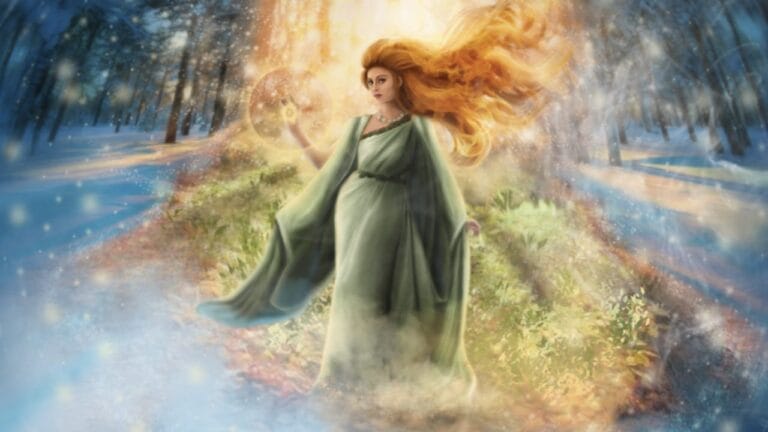
Imbolc is an ancient Celtic festival celebrating the first stirrings of spring, the return of light, and the blessing of the goddess Brigid. Observed on February 1st and extending through sunset on February 2nd, Imbolc marks the exact midpoint between the Winter Solstice (Yule) and the Spring Equinox (Ostara) on the Wheel of the Year. While much of the Northern Hemisphere still shivers under winter’s grip, Imbolc whispers a promise: new life is quickening in the belly of the earth.
This sacred festival has survived centuries of religious transformation, remaining vibrant in both pre-Christian Celtic tradition and modern Pagan practice. Remarkably, its influence extends to unexpected contemporary customs—Groundhog Day and Candlemas are direct descendants of Imbolc’s ancient weather divination rituals.
The Meaning and Etymology of Imbolc
What Does “Imbolc” Mean?
The word Imbolc (pronounced IM-bolk or IM-bolg) comes from the Old Irish i mbolg, literally translating to “in the belly.” This evocative phrase refers to the pregnancy of ewes and lactating sheep, the first signs that fertility was returning to the land after the barren months of winter.
On the surface, this may seem like a simple agricultural marker. But the deeper meaning is profoundly symbolic: Imbolc celebrates all that is gestating unseen, all that is preparing to be born, all that is incubating in potential. It is a festival not of visible blooms, but of hidden quickening—the seed stirring in the soil, the fetus growing in the womb, the idea forming in the mind before it manifests into reality.
Historical Significance:
Imbolc is one of the four major Celtic fire festivals (the others being Beltane, Lughnasa, and Samhain) and is the oldest documented seasonal celebration in the Gaelic calendar. The first recorded mention of Imbolc appears in The Ulster Cycle, specifically in the medieval Irish saga Cú Chulainn’s Courtship of Emer, written between the 8th and 11th centuries, where the character Emer describes the passage of time through these four festivals.
Also read: The Ruling Deities, Gods and Goddesses of Each Zodiac Sign
Brigid: The Goddess at the Heart of Imbolc
Who Is Brigid?
Brigid (also spelled Brighid, Bride, Brigantia, or Bríd) is one of the most powerful and beloved figures in Celtic mythology. She is a triple goddess, meaning she embodies three distinct divine aspects, all united by the element of fire. In ancient Irish texts like Cormac’s Glossary (compiled in the 9th century), she is described as the daughter of the Dagda (the “Good God,” father of all Celtic deities) and is said to have had two sisters, also named Brigid, representing her three domains.
The Three Fires of Brigid
Brigid’s power is expressed through three primary aspects, each represented by a different “fire”:
1. The Fire of the Hearth – Brigid the Healer and Mother
As the goddess of the hearth and home, Brigid represents warmth, comfort, protection, and domestic healing. She is the keeper of the family fire—both literally and metaphorically. She watches over midwives, childbirth, and the care of children and animals. Shepherds and farmers revered her as protector of their flocks and livestock, particularly sheep and cows.
Her healing fire extends to medicine, herbs, and the gentle art of tending to the sick. She is associated with wells and springs, which in Celtic spirituality are considered gateways to divine healing and wisdom.
2. The Fire of the Forge – Brigid the Smith and Warrior
In this aspect, Brigid is a powerful artisan and crafter. She is the patroness of smiths, metalworkers, craftspeople, and all those who transform raw materials into finished goods through fire and skill. Her forge represents the creative principle—the power to take chaos and shape it into order, to take potential and forge it into reality.
Beyond metalworking, Brigid’s forge-fire extends to all crafts and creative endeavors. She is also invoked in martial arts and warfare, representing the warrior’s courage and the power to overcome obstacles through skill and determination.
3. The Fire of Inspiration – Brigid the Poet and Muse
As the goddess of poetry, learning, divination, prophecy, and all forms of creative inspiration, Brigid ignites the spark of genius. She is the muse who whispers verses to poets, clarity to scholars, and insight to healers. Cormac’s Glossary calls her “the goddess whom poets adored” and “woman of wisdom.”
In this guise, she is associated with all forms of knowledge—sacred knowledge, mundane knowledge, artistic inspiration, and spiritual insight. She is the fire of the mind, illuminating truth and inspiring creative expression.
Also read: Discover Your Celtic Goddess: Zodiac Signs and Their Divine Protectors
The Sacred Flame of Kildare
One of the most famous myths associated with Brigid is the Eternal Flame of Kildare. According to legend, a sacred fire was kept continuously burning at Brigid’s shrine in Kildare, Ireland, tended by nineteen priestesses or nuns who each guarded the flame for a day. On the twentieth day, it was believed that Brigid herself tended the flame.
This eternal fire was so significant that even after the site became a Christian nunnery dedicated to Saint Brigid, the flame continued to burn—a remarkable testament to Brigid’s enduring power. The tradition was only interrupted in 1220 when Archbishop Henry of Dublin extinguished it by papal order. However, the flame was relit in 1992 and continues to burn today in Kildare, symbolizing the unbroken chain connecting ancient pagan veneration to modern spiritual practice.
The Syncretism: Brigid the Goddess Becomes Saint Brigid
From Pagan Goddess to Christian Saint
One of the most fascinating examples of religious syncretism in European history is the transformation of the Celtic goddess Brigid into Saint Brigid of Kildare (c. 452-524 CE). Rather than attempting to erase the goddess entirely, early Christian missionaries in Ireland wove her attributes and feast day directly into Christian practice.
Saint Brigid shares remarkably similar characteristics with her pagan predecessor: she is a patroness of healing, poetry, fire, metalworking, and protection. Her feast day remains February 1st—precisely Imbolc. Even her monastery in Kildare preserved the sacred flame, maintaining the goddess’s eternal fire under Christian guardianship.
This blending represents what scholars call the “Holy Woman Brigid”—a persona that encompasses both sacred traditions and serves as a bridge between ancient Celtic spirituality and Christian faith.
Saint Brigid’s Day and Modern Recognition
In 2023, the Irish government officially recognized Saint Brigid’s Day (February 1st) as a national public holiday in Ireland—making it the first holiday dedicated to a woman in the country’s modern history. This recognition reflects both historical significance and contemporary efforts to honor women’s spiritual and cultural contributions.
Imbolc, Candlemas, and Groundhog Day: A Trinity of Traditions
The Triple Connection
February 1st-2nd is unique in hosting three interconnected celebrations, each rooted in the same ancient Imbolc tradition but expressed through different cultural and spiritual frameworks:
Imbolc (February 1-2) – The ancient Celtic festival honoring Brigid and the stirring of spring.
Saint Brigid’s Day (February 1st) – The Christian feast day of Saint Brigid, the Irish saint conflated with the goddess.
Candlemas (February 2nd) – The Christian feast of the Purification of the Blessed Virgin Mary, originally established by the Pope in the 9th century to Christianize the pagan Imbolc observance. The tradition of lighting candles honors both Mary and the returning light.
Groundhog Day (February 2nd) – The American folk tradition of weather prediction, which evolved from Germanic and Christian Candlemas customs, which in turn derived from ancient Imbolc weather divination practices.
The Historical Evolution
The connection between these observances reveals layers of cultural transmission and transformation:
- Ancient Imbolc: The Celts observed weather signs on Imbolc to predict the coming season’s harshness or mildness. Clear, sunny weather was believed to indicate that winter would linger; overcast skies promised an early spring.
- Candlemas: In the 9th century, Pope Gelasius I replaced the pagan Imbolc celebration with the Christian Feast of Purification and the blessing of candles. However, the weather divination practice persisted. A clear, sunny Candlemas came to be seen as an omen of prolonged winter—a direct continuation of the pagan belief.
- German and Groundhog Day: German and Swiss immigrants brought the Candlemas weather-watching tradition to Pennsylvania, but adapted it to local fauna. The badger or hedgehog used in European tradition became the groundhog (woodchuck) in North America. If the groundhog saw its shadow on February 2nd (indicating clear weather), six more weeks of winter were predicted—a direct echo of the original Celtic omen.
As one researcher noted, “Candlemas day, the 2nd of February, used to be held in the old pagan times as a kind of saturnalia, with dances and torches and many unholy rites.”
Also read: Fallen Angels Names List, Stories, Meanings, Duties and History
Traditional Folk Customs and Rituals
Ancient Imbolc Practices
While written records of ancient Imbolc celebrations are limited (many come from later Christian monks recounting pagan practices), archaeological evidence and folklore suggest several key traditions:
Bonfires and Fire Festivals
Imbolc was one of the four Celtic fire festivals, and bonfires were lit to honor Brigid and encourage the returning sun. The fire symbolized both purification and the warming of the earth.
The Corn Dolly and Brigid’s Bed
Young women would craft a doll or figure (dealbh Bríde) from corn, rushes, or straw, representing Brigid or the goddess of fertility. This figure would be placed in a special bed (leaba Bríde) with a white birch wand beside it. The birch wand symbolized Brigid’s power and her role in stirring the earth to awaken.
Processions and Luminarias
In some regions, young women dressed in white would process through villages carrying bright shells or crystals to represent the guiding star or light of Brigid, singing songs to invoke her blessings.
Brigid’s Mantle and Household Blessing
Cloth or ribbons would be left outside on Imbolc Eve—traditionally called Brat Bríde (Brigid’s mantle). According to legend, Brigid would travel the land at night and pass her hand over these cloths, blessing them with healing power. The blessed fabric would then be kept in the home throughout the year as a protective and healing charm.
Milk Offerings
As the season of lambing and first milk production, offerings of fresh milk or cream would be poured onto the earth or left on doorsteps as an offering to Brigid and a prayer for abundant fertility and growth.
Modern Imbolc Celebrations: Rituals for Today
Contemporary Pagans, Wiccans, and spiritually-minded individuals have preserved and adapted Imbolc traditions for modern practice. Here are accessible ways to honor this sacred festival:
Home Cleansing and Purification
Spring Cleaning with Intention
Imbolc is traditionally a time of thorough cleansing—physically, emotionally, and spiritually. Modern practitioners often begin Imbolc celebrations with a comprehensive house cleaning, recognizing that a clean, ordered space invites fresh energy and Brigid’s blessing.
Steps:
- Physically clean every room, with conscious intention rather than rushed obligation
- Open windows to air out stale winter energy
- Sweep or vacuum with the intention of removing negativity and stagnation
- Declutter areas that have accumulated unnecessary items over winter
Candle Rituals
The Four-Candle Imbolc Ritual
One widely practiced Imbolc ritual involves lighting candles to invite Brigid’s presence and honor the returning light:
- Light the first candle with the intention: “Even though we’re still in winter, there is new life stirring in the darkness.”
- Light the second candle: “I call in the light and the fire of the growing sun. I call on its power to spark new life deep in the dark.”
- Light the third candle: “Like fire, wisdom, inspiration, and new life will always grow—just like the first spring flowers stirring in the dark.”
- Light the fourth candle, visualizing all four flames joining together as one, creating a unified purifying glow that fills your space with warmth and hope.
Sit with this light and meditate on what you wish to kindle in your own life during the coming season.
Creating a Brigid’s Cross
The Traditional Straw Cross
One of the most iconic Imbolc practices is crafting a Brigid’s Cross from rushes, straw, or woven strips of fabric. These crosses are typically woven in a simple square or cross pattern and traditionally hung above doors or windows to welcome Brigid into the home.
According to legend, Brigid will bless the cross as she passes on the night of February 1st, imbuing it with protective and healing power for the household.
How to Make a Simple Brigid’s Cross:
- Gather four rushes, straw, or long plant stems
- Fold them in half to create a square center
- Weave additional strands through the center, creating arms that extend outward
- Tie off the ends with twine or thread
- Hang the finished cross above a door, window, or on your altar
The woven square center represents the protection of the home, while the four arms reach out in the cardinal directions, carrying Brigid’s blessings to all corners of your dwelling and beyond.
Brigid’s Mantle Ritual
Blessing Cloth for Healing Throughout the Year
Continue the ancient practice of Brigid’s Mantle in modern times:
- Choose a white cloth, ribbon, or scarf—something meaningful and durable
- On the evening of February 1st, leave the cloth outside (on a windowsill, doorstep, or garden)
- As you place it outside, speak an intention: “Brigid, I leave this cloth for your blessing. Pass your hand over it as you walk the land this night. May it carry your healing and protection into my home and my life.”
- Retrieve the cloth the next morning
- Keep it in a sacred place in your home—on an altar, in a bedroom, or wrapped around a candle
- Throughout the year, use this blessed cloth for healing rituals, wrap it around loved ones who are ill, or simply touch it when you need to feel Brigid’s presence and protection.
The Cleansing Bath Ritual
Imbolc Purification Practice
Create a sacred bathing experience that combines physical cleansing with spiritual purification:
- Prepare the space: Light candles around the tub, turn off harsh overhead lighting, and play gentle music
- Add herbs: Consider adding dried rosemary, mugwort, or lavender—herbs associated with Brigid and purification
- Set intention: As you enter the water, imagine bathing in Brigid’s healing fire, releasing winter’s heaviness and preparing for spring’s renewal
- Meditate: Reflect on what you wish to release (habits, relationships, limiting beliefs, stagnation) and what you wish to welcome (inspiration, creativity, growth, light)
- Visualization: Imagine the water absorbing all that no longer serves you, carrying it away as you drain the tub
Altar Setup for Imbolc
Create a sacred altar space honoring Brigid and the season:
Traditional Altar Elements:
- White or red candles – symbolizing Brigid’s flame and purification
- Brigid’s Cross – woven or purchased
- Bowl of milk or cream – traditional offering to Brigid
- Snowdrops, crocuses, or other early spring flowers – representing the first stirrings of life
- Seeds – to be blessed and later planted, symbolizing intentions for the year
- Smooth stones – representing earth and stability
- Herbs – rosemary, mugwort, basil, or bay laurel
- Cauldron or chalice – Brigid’s sacred tools
- Corn dolly or craft tool – representing creativity and craftsmanship
Arrange these elements with intention, keeping Brigid’s threefold nature (healer, smith, poet) at the center.
Imbolc Symbols, Correspondences, and Colors
Colors Associated with Imbolc:
White (purity, new beginnings), Red (fire, passion), Pink (love, compassion), Black (the still darkness before spring)
Stones and Crystals:
Amethyst (spiritual awakening), Bloodstone (courage and vitality), Garnet (renewal and energy), Ruby (passion and fire), Turquoise (protection)
Flowers and Plants:
Snowdrops, crocuses, angelica, basil, bay laurel, celandine
Foods:
Dairy products (butter, milk, cheese), bread, baked goods, winter vegetables, seeds, dried fruits, lamb or mutton
Animals:
Cow, sheep, swan, hedgehog (connection to Groundhog Day), white birds (doves, swans)
Tools:
Cauldron, chalice, candles, forge tools, wands, herbs
FAQ About Imbolc and Brigid
When is Imbolc celebrated?
Imbolc is observed on February 1st, with celebrations often extending through sunset on February 2nd. Some practitioners observe from Imbolc Eve (evening of January 31st) through the evening of February 2nd, creating a three-day celebration window.
Is Imbolc the same as Groundhog Day and Candlemas?
These three observances share common roots in ancient Imbolc traditions but are distinct celebrations: Imbolc is the Celtic pagan festival; Candlemas is the Christian Feast of Purification; and Groundhog Day is an American folk tradition derived from both. All three occur around February 1st-2nd and share themes of weather divination, light, and the threshold between seasons.
Can anyone celebrate Imbolc?
Yes. While Imbolc has Celtic roots and is central to Wiccan and Pagan practice, people of any background can respectfully observe this festival. The themes of renewal, hope, and creative potential are universal.
What if I don’t have all the traditional supplies?
We can celebrate imbolc simply and authentically without elaborate supplies. A single white candle, your intention, and genuine presence are sufficient. The power of Imbolc lies in the intention and spiritual connection, not material accumulation.
How does Imbolc fit into the Wheel of the Year?
Imbolc is the first sabbat of the eight-fold Pagan year, occurring midway between Yule (Winter Solstice) and Ostara (Spring Equinox). It marks the beginning of the lighter half of the year.
Conclusion: The Eternal Return of Light
Imbolc is far more than a quaint folk festival—it is a celebration of the eternal cycle of death and rebirth, darkness and light, potential and manifestation. In the depth of winter, when the world still sleeps under snow and frost, Imbolc whispers a profound truth: even now, in the belly of the earth and in the hidden depths of our own souls, life is quickening.
Brigid, in all her triple glory—healer, smith, and poet—stands as a symbol of transformation, inspiration, and the sacred fire that burns within us all. Whether you light a candle, weave a cross, clean your home, or simply pause to acknowledge the returning light, Imbolc invites you into a dialogue with ancient wisdom and eternal cycles.
From the priestesses tending Brigid’s eternal flame in ancient Kildare to the modern practitioner lighting candles on February 1st, the festival endures as a testament to humanity’s deep need to mark transitions, honor the divine feminine, and kindle hope as we turn toward spring.
As the ancient Celts understood, and as we can rediscover each February: the light is always returning. The seeds of spring are always stirring. Brigid is always present, blessing those who remember to welcome her flame into their homes and hearts.