
In 1948, Bertram R. Forer administered a personality test to all the students in his psychology class. When he distributed the results, he asked them to rate their level of identification with the test on a scale of 0 to 5. The average rating was 4.2, a remarkable success for psychological assessment. The only problem was that Forer had given everyone the same profile.
Human beings tend to convince themselves that vague and general descriptions fit them like a glove. This is called the ‘Forer Effect’ and it’s the psychological framework upon which horoscopes, the occult, and astrology are built. However, we can’t stop there. The world of mystery and divination generates such a profound fascination that it demands our attention.
The Paradoxical Relevance of the Horoscope
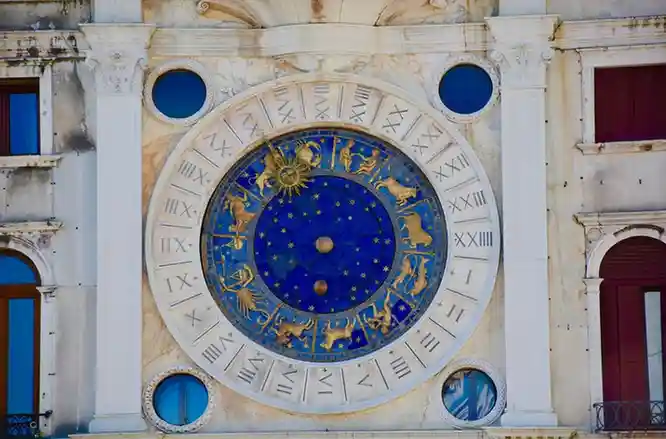
Astrology has fascinated humankind for hundreds and thousands of years. People gazed at the sky, scrutinized the position of the stars, observed the slow journey of celestial bodies through the universe, and, with all this, tried to create a map of the future to help them live their lives better. And we continue to do so.
In recent decades, and although very few people openly profess to believe in them, interest in these occult practices has returned (and with force) to the West. Whether through television, the internet, or the press, it seems obvious that horoscopes have become an essential part of popular culture ( Evans, 1996 ). So much so that, in 1984, the Committee for Skeptical Inquiry (CSICOP) launched a campaign to require newspapers to include a disclaimer explaining that such columns “should be read for entertainment purposes only” and that they “had no scientific basis.” By 1998, some 60 magazines in North America still carried this disclaimer ( Blackmore and Seebold, 2001 ).
With or without warning, as entertainment or as qualified advice, horoscopes in the press and fortune-telling programs on late-night TV are two of those things that people continue to consume massively and that continue to make their consumers “feel better,” according to surveys.
What We Say About Horoscopes
Despite this, horoscopes have been a little-studied topic ( Evans, 1996 ), and although the Forer effect may explain why we identify with our zodiac sign ( Fichten and Sunerton, 1983 ), the question of their social role is more difficult to unravel. In my view, the best approach is to examine the content of horoscopes directly. There’s a lot to unpack there.
William Evans ( 1996 ) discovered substantial differences between horoscopes geared toward the working class and those geared toward the middle class. In the former, for example, it was less common to find advice encouraging travel or spending money than in the latter. Similarly, working-class horoscopes predicted less career advancement and fewer positive interactions with family. Middle-class horoscopes tended to encourage more autonomy and “following one’s passions.”
So much so that, according to their findings, the reader’s socioeconomic status was the best predictor of the horoscope’s content . However, they all encouraged caring for others, being patient and cooperative, and avoiding confrontations.
In 2014, Tandoc and Ferrucci also analyzed the astrological sections of magazines such as ‘ Glamour ‘, ‘ Essence ‘, Mytodayshoroscopes and ‘ Teen Vogue ‘. Their findings suggest that, despite focusing on topics like love, money, and work, these sections reinforced gender stereotypes, which were then shaped by factors such as race and age.
Gupta, Zimmerman, and Fruhauf ( 2008 ) analyzed the astrological content of Cosmopolitan magazine over a year and found that readers consistently received stereotypical advice. Similarly, Svensen and White ( 1995 ) analyzed a large number of horoscopes and corroborated that this type of literature promoted what they understood as ‘social conformity’.
Mechanisms for Satisfaction and Consensus
Given this analysis of the actual content of horoscopes, it’s difficult not to return to Adorno. In ‘The Stars Down to Earth’ ( 1994 ), the philosopher and sociologist analyzed three months of horoscopes from the Los Angeles Times and linked astrology and the occult as yet another phenomenon of a sociocultural industry that ranges from films to self-help and whose mission is “to justify painful conditions that seem more tolerable if one adopts an affirmative attitude toward them.” In other words, the objective (explicit or implicit) is ” to foster an atmosphere of social satisfaction and facilitate the adjustment of citizens to their usual context.”
Adorno’s conclusions are somewhat speculative, but it is true that we have some evidence suggesting that horoscope readers’ attitudes are affected by the content of the horoscopes ( Blackmore & Seebold, 2001 ; Bailey, 1997; Clobert, Van Cappellen, Bourdon, & Cohen, 2016 ). Furthermore, the research by Clobert and his team provides us with some interpretive insights by finding a very interesting relationship between the horoscope effect and external locus of control.
In other words, the “subject’s perception that events occur as a result of chance, fate, luck, or the power and decisions of others” makes us more susceptible to horoscopes, even in a context where the vast majority of people declare that they wouldn’t change their behavior because of such things. Above all, because it’s unnecessary.
Society and culture unconsciously shape people’s behavior ( Verplank, 1955 ), and horoscopes seem to act as a kind of advice that prioritizes social conformity in unresolved conflicts of norms ( Fuentes Ortega, 1994 ). This not only eliminates stress and anxiety but also avoids the costs of social dissent.
In other words, despite the limited research on the topic, the available evidence suggests that the reason we feel better when reading our horoscopes is precisely because they give us reasons to adapt to our role in society. To the extent of its (limited) capabilities, it acts as a social lubricant that helps us avoid personal risks, but ultimately becomes, if you’ll allow me the expression, a “voice message from society” that encourages us to reconcile ourselves with it.