
Dussehra, also known as Vijayadashami, is one of India’s most vibrant and significant Hindu festivals, celebrated with immense devotion, enthusiasm, and cultural fervor. This festival symbolizes the triumph of good over evil and is observed with various rituals, traditions, and festivities across India and among Hindu communities worldwide. In 2025, Dussehra will be celebrated on October 2, based on the Hindu lunar calendar, specifically the tenth day (Dashami) of the bright half (Shukla Paksha) of the month of Ashwin. This article delves into the date, historical and mythological stories, and the rituals associated with the Dussehra festival in 2025.
Date of Dussehra 2025
Dussehra is celebrated on the tenth day of the Hindu month of Ashwin, which typically falls in September or October according to the Gregorian calendar. In 2025, Dussehra is expected to be observed on October 2, following the conclusion of the nine-day festival of Navratri, which will take place from September 22 to October 1, 2025. The exact date is determined by the lunar calendar and may vary slightly based on regional astrological calculations. The festival coincides with the culmination of Navratri, a period dedicated to the worship of Goddess Durga, and marks the victory of Lord Rama over Ravana or Goddess Durga over the demon Mahishasura.
The Story Behind Dussehra
Dussehra is deeply rooted in Hindu mythology and is associated with two primary narratives from the epics Ramayana and Devi Mahatmya. These stories emphasize the victory of righteousness and divine power over evil forces, making Dussehra a celebration of moral and spiritual triumph.
1. The Victory of Lord Rama Over Ravana
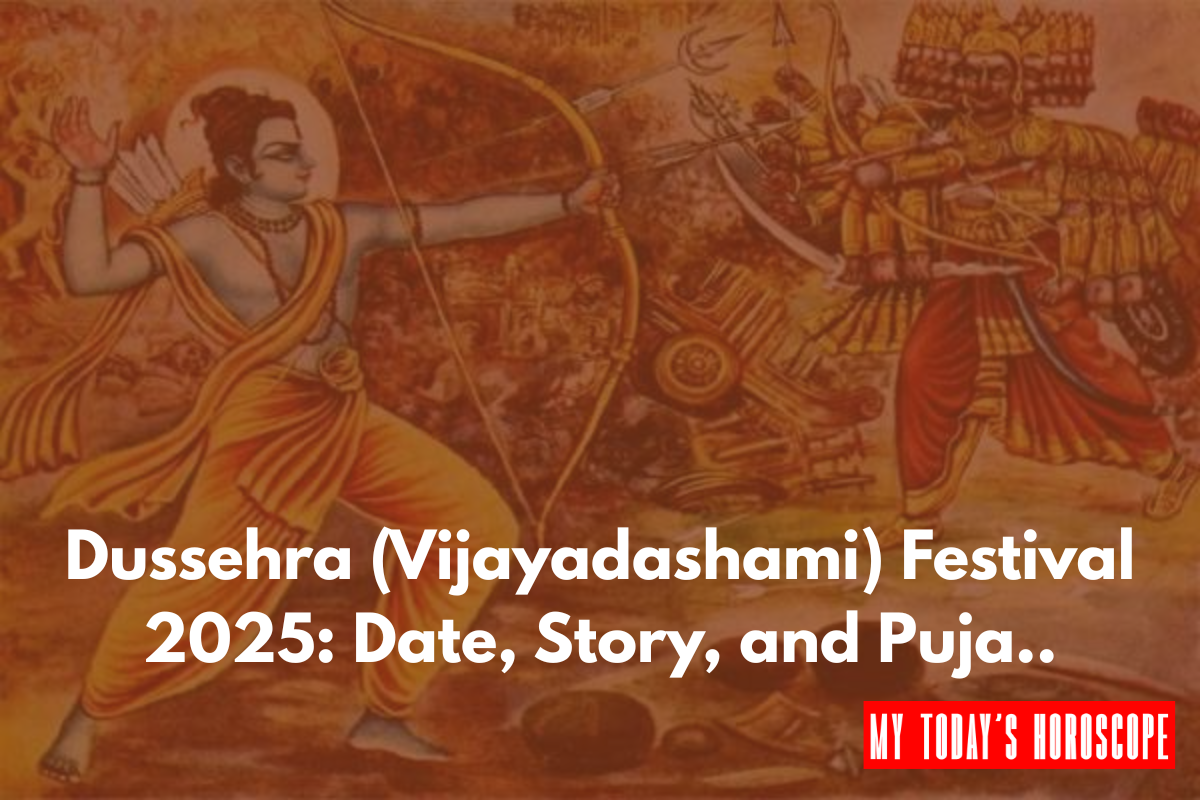
The most widely recognized story associated with Dussehra comes from the epic Ramayana. According to the legend, Lord Rama, the seventh incarnation of Lord Vishnu, defeated the ten-headed demon king Ravana, who had abducted Rama’s wife, Sita. Ravana, the ruler of Lanka, was a powerful but arrogant king whose tyranny threatened the balance of dharma (righteousness).
Rama, accompanied by his devoted brother Lakshmana, loyal follower Hanuman, and an army of monkeys (Vanara Sena), waged a fierce battle against Ravana. After a prolonged war, on the tenth day, Rama defeated Ravana by piercing his heart with a divine arrow, rescuing Sita and restoring dharma. This victory is commemorated on Dussehra, also called Vijayadashami, meaning “the tenth day of victory.” The burning of Ravana’s effigies during the festival symbolizes the destruction of evil and the triumph of good.
2. Goddess Durga’s Triumph Over Mahishasura
Another significant narrative linked to Dussehra is the victory of Goddess Durga over the buffalo demon Mahishasura, as described in the Devi Mahatmya. Mahishasura, a shape-shifting demon, gained immense power through a boon that made him invincible to men and gods. His tyranny terrorized the heavens and earth, prompting the gods to create Goddess Durga, a powerful embodiment of divine feminine energy (Shakti).
Durga, armed with weapons bestowed by the gods, fought Mahishasura for nine days and nights during Navratri. On the tenth day, she slayed the demon, restoring peace and order. This victory is celebrated as Vijayadashami, particularly in eastern India, where Durga Puja is a grand festival culminating on this day. The immersion of Durga idols in water bodies marks the goddess’s return to her divine abode after her triumph.
3. Other Regional Legends
In addition to these primary stories, Dussehra holds regional significance. For instance, in some parts of India, Vijayadashami is associated with the Pandavas from the Mahabharata. After completing their 13-year exile, the Pandavas retrieved their weapons, which they had hidden in a Shami tree, and worshipped them before embarking on their journey to reclaim their kingdom. This practice is commemorated in some regions through the worship of the Shami tree or the exchange of its leaves as a symbol of goodwill.
Significance of Dussehra
Dussehra is a multifaceted festival with spiritual, cultural, and social significance:
- Spiritual Significance: The festival represents the victory of good over evil, encouraging devotees to overcome negative tendencies and embrace virtues like truth, courage, and righteousness.
- Cultural Significance: Dussehra is celebrated with diverse traditions, including Ramlila performances, Durga idol immersions, and community gatherings, showcasing India’s rich cultural heritage.
- Social Significance: It fosters unity and joy, bringing families and communities together to celebrate shared values and traditions.
The festival also marks the end of Navratri and the beginning of preparations for Diwali, which occurs 20 days later, symbolizing a period of renewal and festivity.
Puja and Rituals of Dussehra 2025
Dussehra is celebrated with a variety of rituals that vary across regions but share a common theme of devotion, gratitude, and celebration. Below is an overview of the key rituals and practices associated with Dussehra:
1. Preparation for the Puja
- Cleaning and Sanctification: Homes and workplaces are thoroughly cleaned to create a pure environment for worship. Many people decorate their homes with rangoli, flowers, and mango leaves.
- Setting Up the Altar: A small altar is prepared with idols or images of Lord Rama, Goddess Durga, or other deities. The altar is adorned with flowers, incense, and lamps.
2. Morning Puja
- Bathing and Dressing: Devotees begin the day with a ritual bath (snan) and wear clean, preferably traditional, clothes.
- Worship of Deities: The puja begins with offerings to Lord Rama or Goddess Durga. Devotees chant mantras, such as the Durga Saptashati or Ram Tarak mantra, and offer flowers, fruits, sweets, and incense.
- Aarti: The puja concludes with the singing of aarti (devotional songs) and the lighting of oil lamps to invoke divine blessings.
3. Shami Puja and Ayudha Puja
- Shami Puja: In some regions, the Shami tree is worshipped, as it is believed to have been significant in the Pandavas’ story. Devotees offer prayers and exchange Shami leaves, symbolizing victory and prosperity.
- Ayudha Puja: Particularly in South India, tools, weapons, books, and instruments are worshipped on Vijayadashami to honor their role in daily life and seek blessings for success. This is especially significant for students, professionals, and artisans.
4. Ramlila and Effigy Burning
- Ramlila Performances: In North India, Ramlila, a dramatic reenactment of Lord Rama’s life from the Ramayana, is performed over the nine days of Navratri, culminating on Dussehra. Communities gather to watch these plays, which depict Rama’s victory over Ravana.
- Ravana Dahan: A highlight of Dussehra in many parts of India, especially in the north, is the burning of large effigies of Ravana, along with his brother Kumbhakarna and son Meghnada. This ritual, accompanied by fireworks, symbolizes the destruction of evil.
5. Durga Visarjan
In eastern India, particularly West Bengal, Odisha, and Assam, Dussehra marks the culmination of Durga Puja. The beautifully crafted idols of Goddess Durga are immersed in rivers or water bodies in a grand procession known as Visarjan. This ritual signifies the goddess’s return to her divine abode after her victory over Mahishasura.
6. Feasting and Community Celebrations
- Traditional Foods: Families prepare festive meals, including sweets like laddoos, jalebis, and kheer, and savory dishes like puri, sabzi, and regional specialties.
- Community Gatherings: Dussehra is a time for social bonding, with fairs, cultural programs, and processions held in many towns and cities.
7. Regional Variations
- Kullu Dussehra (Himachal Pradesh): Unlike the rest of India, Kullu’s Dussehra begins on Vijayadashami and continues for a week with a grand procession of local deities, fairs, and cultural events.
- Mysore Dasara (Karnataka): The royal city of Mysore hosts a spectacular Dasara festival, featuring a grand procession with decorated elephants, cultural performances, and the illumination of the Mysore Palace.
- Bastar Dussehra (Chhattisgarh): This unique 75-day festival, one of the longest in the world, focuses on tribal traditions and the worship of local deities like Danteshwari.
How to Celebrate Dussehra 2025
To celebrate Dussehra meaningfully in 2025, consider the following steps:
- Participate in Rituals: Perform puja at home or visit temples to offer prayers to Lord Rama or Goddess Durga.
- Attend Ramlila or Durga Puja: Join community events to witness Ramlila performances or Durga idol immersions.
- Engage in Charity: Dussehra is an auspicious time for acts of kindness, such as donating to the needy or helping community initiatives.
- Learn and Share: Educate younger generations about the stories and values of Dussehra to keep the traditions alive.
- Celebrate Sustainably: Opt for eco-friendly idols and minimize firecracker use to reduce environmental impact during Ravana Dahan or Visarjan.
Conclusion
Dussehra 2025, celebrated on October 2, is a festival that resonates with the timeless message of good triumphing over evil. Whether through the valor of Lord Rama, the divine power of Goddess Durga, or the cultural richness of regional traditions, Dussehra inspires devotion, unity, and renewal. By participating in its rituals, attending community events, and reflecting on its spiritual significance, devotees can embrace the festival’s essence and carry its values into their lives. As India and Hindu communities worldwide prepare for this vibrant celebration, Dussehra 2025 promises to be a joyous occasion filled with faith, festivity, and cultural pride.