
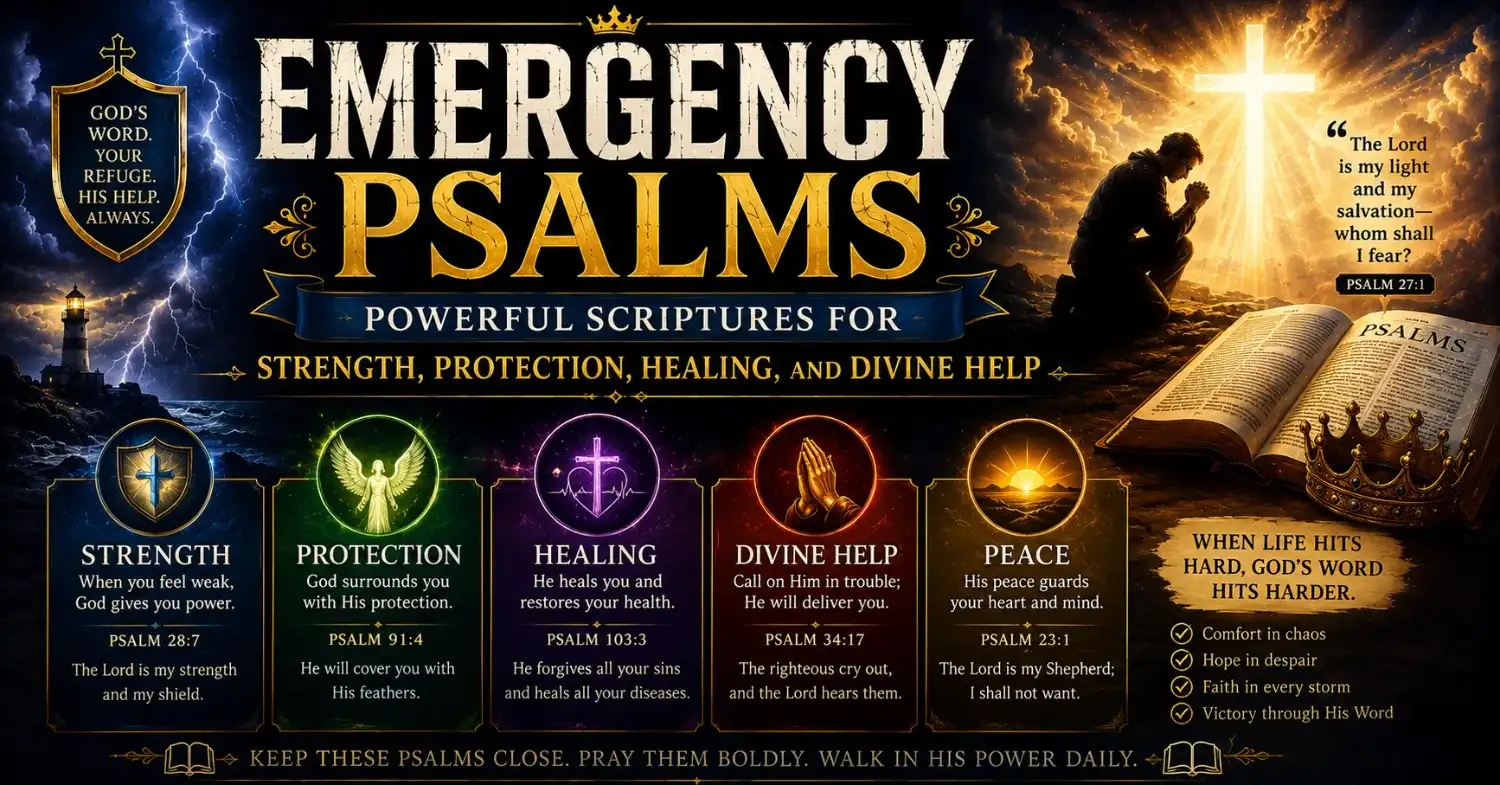
Life can change in a moment. One unexpected phone call, sudden illness, financial crisis, emotional breakdown, family conflict, or spiritual struggle can leave a person feeling overwhelmed, fearful, and desperate for comfort. During these moments of emotional and spiritual emergency, many believers turn to one of the most powerful sections of the Bible: the Book of Psalms.
Often called the prayer book of the Bible, the Psalms contain raw human emotions — fear, grief, anxiety, hope, gratitude, repentance, and unwavering faith in God’s protection. Unlike formal theological writings, the Psalms speak directly to the human heart. They give language to pain while simultaneously pointing toward divine comfort, strength, and restoration.
For centuries, Christians, Jews, pastors, monks, spiritual leaders, and ordinary believers have relied on specific “Emergency Psalms” during times of crisis. These Psalms are often prayed during:
- Illness
- Fear and anxiety
- Financial struggles
- Spiritual warfare
- Emotional distress
- Family conflict
- Grief and loss
- Protection from danger
- Depression and loneliness
Emergency Psalms are not magical formulas. Rather, they are deeply spiritual prayers that redirect the mind and heart toward God’s presence during life’s darkest moments. Many believers find that reading or praying these scriptures creates emotional peace, spiritual strength, and renewed faith during overwhelming situations.
The beauty of the Psalms lies in their honesty. They remind readers that even faithful people experience fear, confusion, pain, and uncertainty — yet God remains present through every storm.
What Are Emergency Psalms?
Emergency Psalms are specific Psalms traditionally used during urgent emotional, physical, or spiritual situations. These passages are often selected because they contain themes of:
- Divine protection
- Healing
- Deliverance
- Peace
- Strength
- Comfort
- Hope
- Spiritual refuge
The Book of Psalms contains 150 sacred songs and prayers, many written by King David. Throughout history, believers have turned to these scriptures during personal crises because they express both vulnerability and faith simultaneously.
Unlike ordinary motivational words, Emergency Psalms connect emotional suffering with spiritual trust. They help people feel seen, heard, and spiritually supported during painful circumstances.
Why the Psalms Feel So Powerful During Crisis
The Psalms resonate deeply during emergencies because they acknowledge real human emotions instead of denying them.
Many biblical passages offer instruction or theology, but the Psalms often sound like deeply personal conversations with God. They include:
- Fear
- Anger
- Grief
- Doubt
- Desperation
- Loneliness
- Joy
- Gratitude
- Faith
King David himself experienced betrayal, war, fear, loss, guilt, and emotional suffering. Because of this, many Psalms feel intensely relatable even thousands of years later.
Spiritually, the Psalms remind believers that:
- God listens during suffering
- Faith does not require emotional perfection
- Fear can coexist with trust
- Prayer creates spiritual refuge
- Hope remains possible even in darkness
This emotional honesty is one reason Emergency Psalms continue to comfort millions of people worldwide.
Psalm 91: The Psalm of Divine Protection
Psalm 91 is perhaps the most famous Emergency Psalm for protection and safety. Many believers pray it during illness, danger, fear, travel, spiritual warfare, or uncertain times.
Why Psalm 91 Is So Powerful
Psalm 91 emphasizes:
- God’s protection
- Spiritual refuge
- Deliverance from danger
- Freedom from fear
- Angelic protection
- Divine security
One of its most quoted verses says:
“He who dwells in the secret place of the Most High shall abide under the shadow of the Almighty.”
This Psalm reassures believers that God remains present even during terrifying situations.
When People Pray Psalm 91
People often turn to Psalm 91 during:
- Medical emergencies
- Anxiety attacks
- Travel fears
- Family protection prayers
- Spiritual warfare
- Times of uncertainty
Many believers read it daily as a prayer of spiritual covering.
Psalm 23: Comfort During Fear and Grief
Psalm 23 is one of the most beloved passages in the Bible because it speaks directly to fear, loss, uncertainty, and divine guidance.
Why Psalm 23 Brings Peace
This Psalm portrays God as a loving shepherd who:
- Guides
- Protects
- Provides
- Comforts
- Restores
The famous verse:
“Even though I walk through the valley of the shadow of death, I will fear no evil.”
has comforted people for generations during grief, illness, and emotional suffering.
When People Pray Psalm 23
Psalm 23 is commonly prayed during:
- Funerals
- Grief
- Depression
- Anxiety
- Loneliness
- Major life uncertainty
Spiritually, it reminds believers that they are never abandoned during difficult seasons.
Psalm 27: Courage During Fear and Uncertainty
Psalm 27 is often called a Psalm of courage because it focuses on confidence in God during fearful situations.
Key Themes of Psalm 27
This Psalm emphasizes:
- Courage
- Faith during fear
- Divine protection
- Spiritual confidence
- Trust in difficult times
One of its most powerful verses says:
“The Lord is my light and my salvation — whom shall I fear?”
When People Use Psalm 27
Believers often pray Psalm 27 during:
- Emotional fear
- Legal battles
- Relationship conflicts
- Career uncertainty
- Spiritual attacks
- Times of insecurity
This Psalm strengthens emotional resilience and spiritual trust.
Psalm 34: Deliverance From Anxiety and Trouble
Psalm 34 focuses on God’s deliverance during emotional pain and crisis.
Spiritual Themes of Psalm 34
The Psalm highlights:
- God’s nearness to the brokenhearted
- Deliverance from fear
- Emotional healing
- Divine rescue
- Gratitude after suffering
One deeply comforting verse says:
“The righteous cry out, and the Lord hears them; he delivers them from all their troubles.”
When People Pray Psalm 34
Psalm 34 is often used during:
- Anxiety
- Panic
- Emotional breakdowns
- Depression
- Family stress
- Overwhelming fear
This Psalm reassures believers that God sees emotional suffering intimately.
Psalm 46: Peace During Chaos
Psalm 46 is a powerful scripture for emotional stability during overwhelming circumstances.
Why Psalm 46 Is Considered an Emergency Psalm
The Psalm declares:
“God is our refuge and strength, an ever-present help in trouble.”
Its themes include:
- Divine refuge
- Strength during chaos
- Emotional calm
- Spiritual confidence
- Stability during crisis
When People Pray Psalm 46
Believers often turn to Psalm 46 during:
- Natural disasters
- Financial crises
- Political uncertainty
- Emotional exhaustion
- Personal chaos
- Times of fear
The Psalm reminds readers that God remains stable even when life feels out of control.
Psalm 121: Help in Difficult Times
Psalm 121 is often called the “Traveler’s Psalm” or “Psalm of Divine Help.”
Spiritual Meaning of Psalm 121
This Psalm focuses on:
- Divine protection
- Constant spiritual care
- God’s watchfulness
- Safety during journeys
- Help during hardship
Its famous opening says:
“I lift up my eyes to the mountains — where does my help come from?”
When People Pray Psalm 121
People commonly pray Psalm 121 during:
- Travel
- Family protection
- Fear about the future
- Major life transitions
- Uncertainty and stress
The Psalm reassures believers that God watches over them continually.
Psalm 51: Healing Through Repentance
Not all emergencies are external. Sometimes the greatest spiritual crisis involves guilt, regret, shame, or emotional brokenness after mistakes.
Psalm 51 is King David’s prayer of repentance after deep personal failure.
Spiritual Themes of Psalm 51
The Psalm focuses on:
- Forgiveness
- Spiritual cleansing
- Mercy
- Emotional healing
- Inner restoration
One powerful verse says:
“Create in me a clean heart, O God.”
When People Pray Psalm 51
Believers often pray Psalm 51 during:
- Guilt
- Spiritual burnout
- Emotional regret
- Desire for forgiveness
- Personal transformation
This Psalm reminds readers that restoration remains possible even after failure.
Psalm 6: Prayer During Emotional Distress
Psalm 6 is one of the Bible’s rawest emotional prayers.
Why Psalm 6 Resonates Deeply
The Psalm expresses:
- Exhaustion
- Emotional pain
- Fear
- Sorrow
- Desperation for help
David openly cries out to God during deep emotional suffering.
When People Use Psalm 6
Psalm 6 is often prayed during:
- Depression
- Emotional exhaustion
- Sleeplessness
- Grief
- Anxiety
- Loneliness
Its honesty reassures people that emotional vulnerability is not weakness in spirituality.
Psalm 30: Hope After Suffering
Psalm 30 focuses on restoration after painful seasons.
Key Themes of Psalm 30
This Psalm emphasizes:
- Healing
- Emotional recovery
- Gratitude
- Joy after sorrow
- Divine restoration
Its most famous line says:
“Weeping may stay for the night, but rejoicing comes in the morning.”
When People Pray Psalm 30
Believers often use Psalm 30 during:
- Recovery from illness
- Emotional healing
- Grief recovery
- Spiritual renewal
- Overcoming difficult seasons
This Psalm reminds readers that suffering is temporary and healing is possible.
Psalm 139: Comfort During Emotional Isolation
Psalm 139 focuses on God’s intimate knowledge of every human being.
Spiritual Themes of Psalm 139
This Psalm emphasizes:
- God’s constant presence
- Emotional intimacy
- Divine understanding
- Personal worth
- Spiritual comfort
One powerful verse says:
“You have searched me, Lord, and you know me.”
When People Pray Psalm 139
Psalm 139 is especially comforting during:
- Loneliness
- Identity struggles
- Anxiety
- Emotional isolation
- Feeling misunderstood
It reassures believers that they are fully seen and deeply loved by God.
How Emergency Psalms Support Mental and Emotional Health
While Emergency Psalms are spiritual scriptures, many psychologists and counselors recognize that prayer, meditation, and sacred reading can positively affect emotional well-being.
Reading Psalms may help:
- Reduce anxiety
- Slow racing thoughts
- Create emotional grounding
- Encourage hope
- Support resilience
- Improve spiritual coping
The repetitive rhythm and poetic language of the Psalms can also feel calming during stress.
Spiritually, the Psalms help shift focus from panic toward trust and surrender.
How To Pray Emergency Psalms Effectively
Many people wonder how to use Emergency Psalms in daily life.
There is no single correct method, but common spiritual practices include:
- Reading slowly and reflectively
- Praying verses aloud
- Journaling emotions afterward
- Repeating comforting passages
- Meditating on specific promises
- Personalizing the words as prayer
Some believers read the same Psalm repeatedly during prolonged crises because familiar scripture creates emotional stability.
Emergency Psalms for Different Situations
For Fear and Anxiety
- Psalm 23
- Psalm 27
- Psalm 91
For Protection
- Psalm 91
- Psalm 121
- Psalm 46
For Healing
- Psalm 30
- Psalm 41
- Psalm 103
For Depression and Emotional Exhaustion
- Psalm 6
- Psalm 34
- Psalm 42
For Forgiveness and Spiritual Restoration
- Psalm 51
- Psalm 32
For Strength During Crisis
- Psalm 46
- Psalm 18
- Psalm 27
These Psalms have provided spiritual comfort to believers for centuries.
Why People Continue Turning to the Psalms Today
In today’s fast-paced and emotionally overwhelming world, many people feel spiritually exhausted, anxious, disconnected, or emotionally burdened.
The Psalms remain powerful because they speak honestly to universal human experiences:
- Fear
- Grief
- Loneliness
- Uncertainty
- Hope
- Healing
- Faith
Unlike superficial positivity, the Psalms acknowledge pain directly while still pointing toward hope and divine presence.
They remind readers that faith is not the absence of struggle — it is learning to seek God within struggle.
The Spiritual Legacy of the Psalms
The Book of Psalms has influenced:
- Christian worship
- Jewish prayer traditions
- Monastic spirituality
- Sacred music
- Meditation practices
- Pastoral counseling
For thousands of years, believers have prayed these same words during wars, plagues, grief, persecution, heartbreak, and personal suffering.
That enduring legacy reflects the timeless emotional power of the Psalms.
Final Thoughts
Emergency Psalms are more than ancient poetry. They are spiritual lifelines for moments when fear, pain, uncertainty, and emotional exhaustion feel overwhelming. Through prayers of protection, healing, courage, repentance, comfort, and hope, the Psalms remind believers that God remains present even in life’s darkest valleys.
Psalm 91 offers protection. Psalm 23 brings peace. Psalm 27 strengthens courage. Psalm 34 comforts the brokenhearted. Psalm 46 provides stability during chaos. Psalm 121 reminds us where help comes from. Psalm 51 restores the soul. Psalm 30 promises joy after sorrow.
Together, these scriptures form a spiritual refuge for anyone facing emotional or spiritual emergencies.
Ultimately, the enduring power of the Psalms lies in this truth: they do not deny human suffering, but they refuse to let suffering have the final word. Even in fear, grief, uncertainty, or desperation, the Psalms continue to whisper a timeless message of hope — that God remains near, faithful, and present through every storm.